Services
Skill training
A training philosophy that puts practice before certification and production before graduation. Nobody leaves with a certificate they cannot back up on a machine.
Methodology
Three phases of learning.
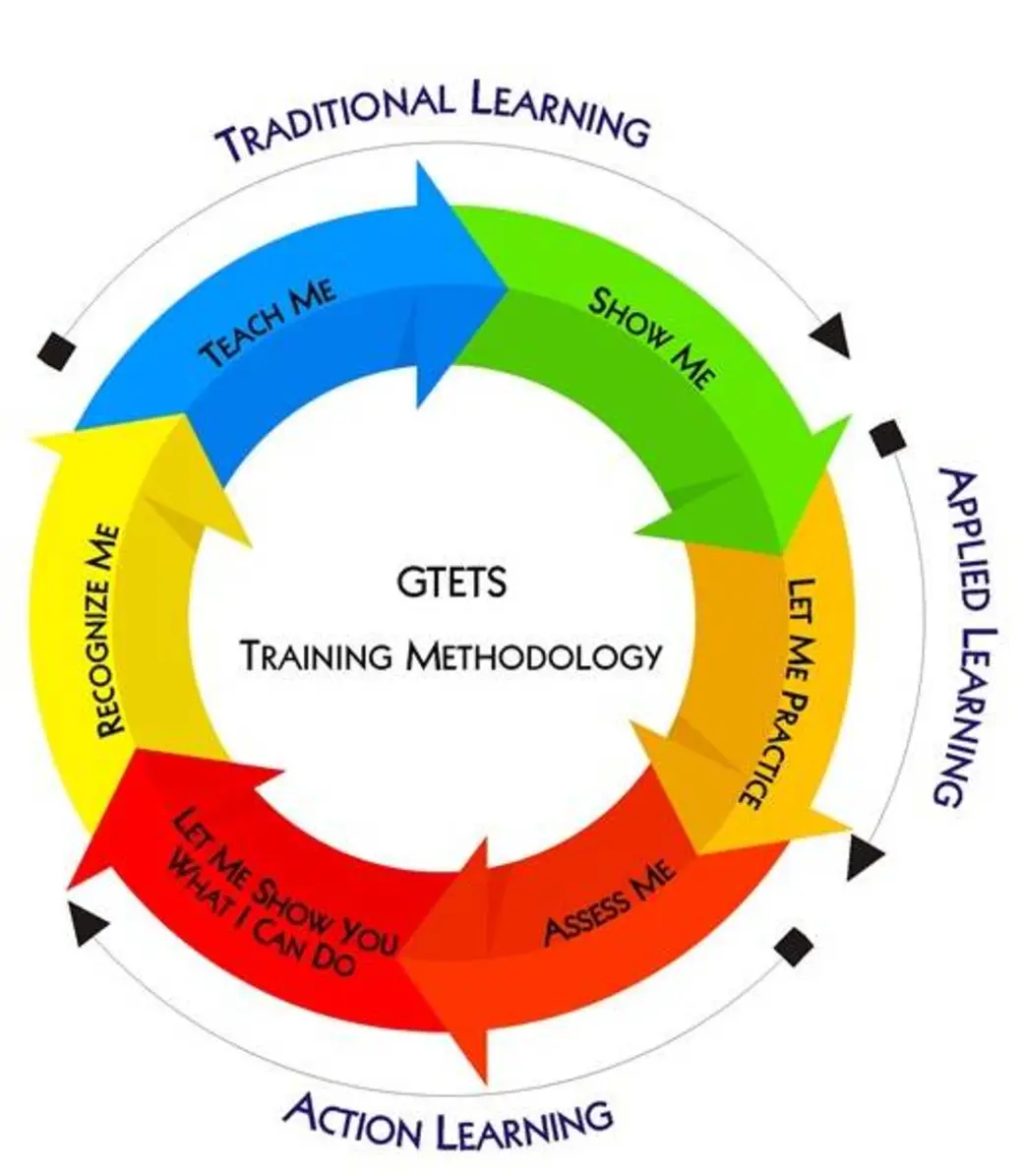
- Phase I
Traditional learning
- Step 01
Teach me
Trade-specific knowledge, literacy, numeracy and technical fundamentals for the course.
- Step 02
Show me
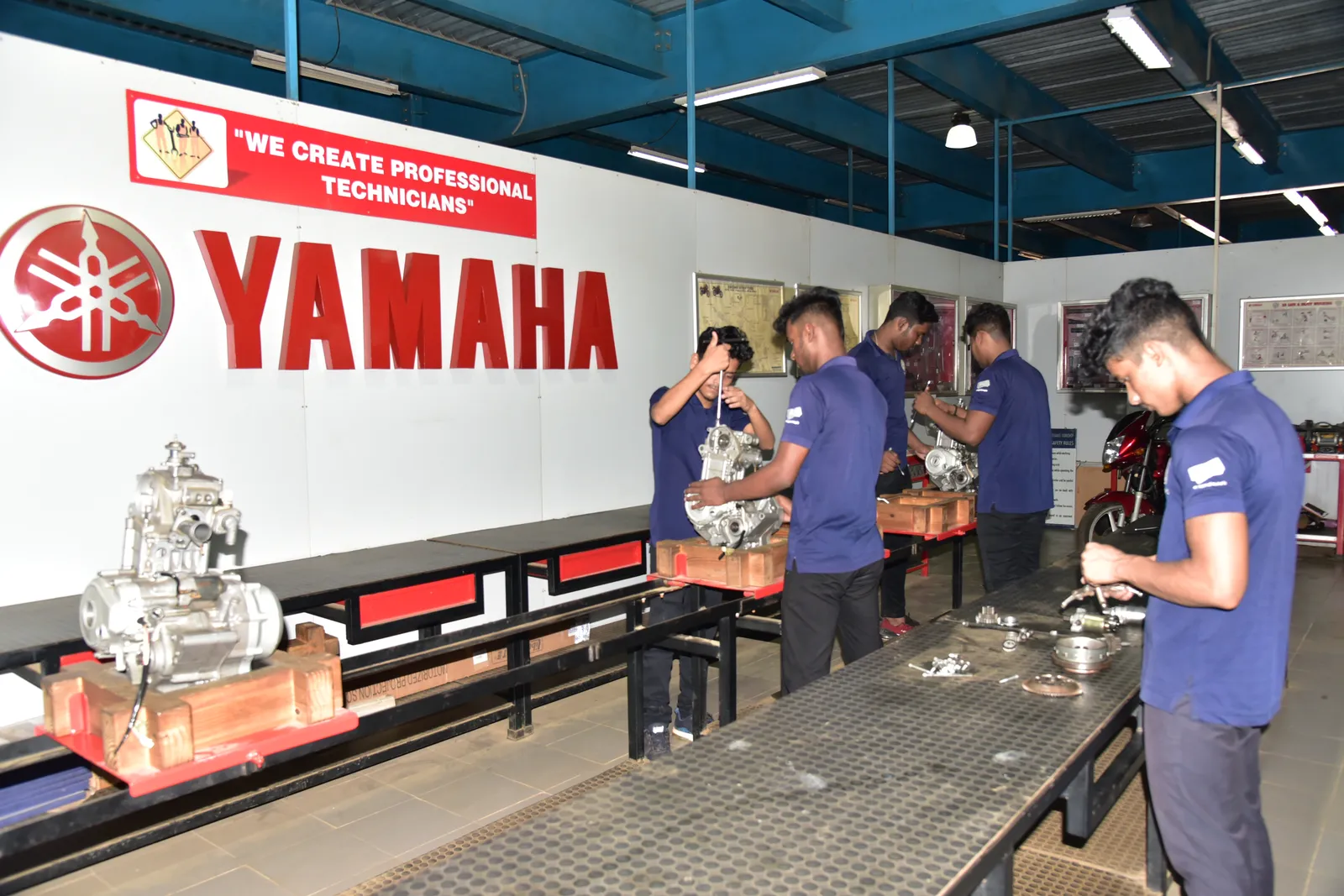
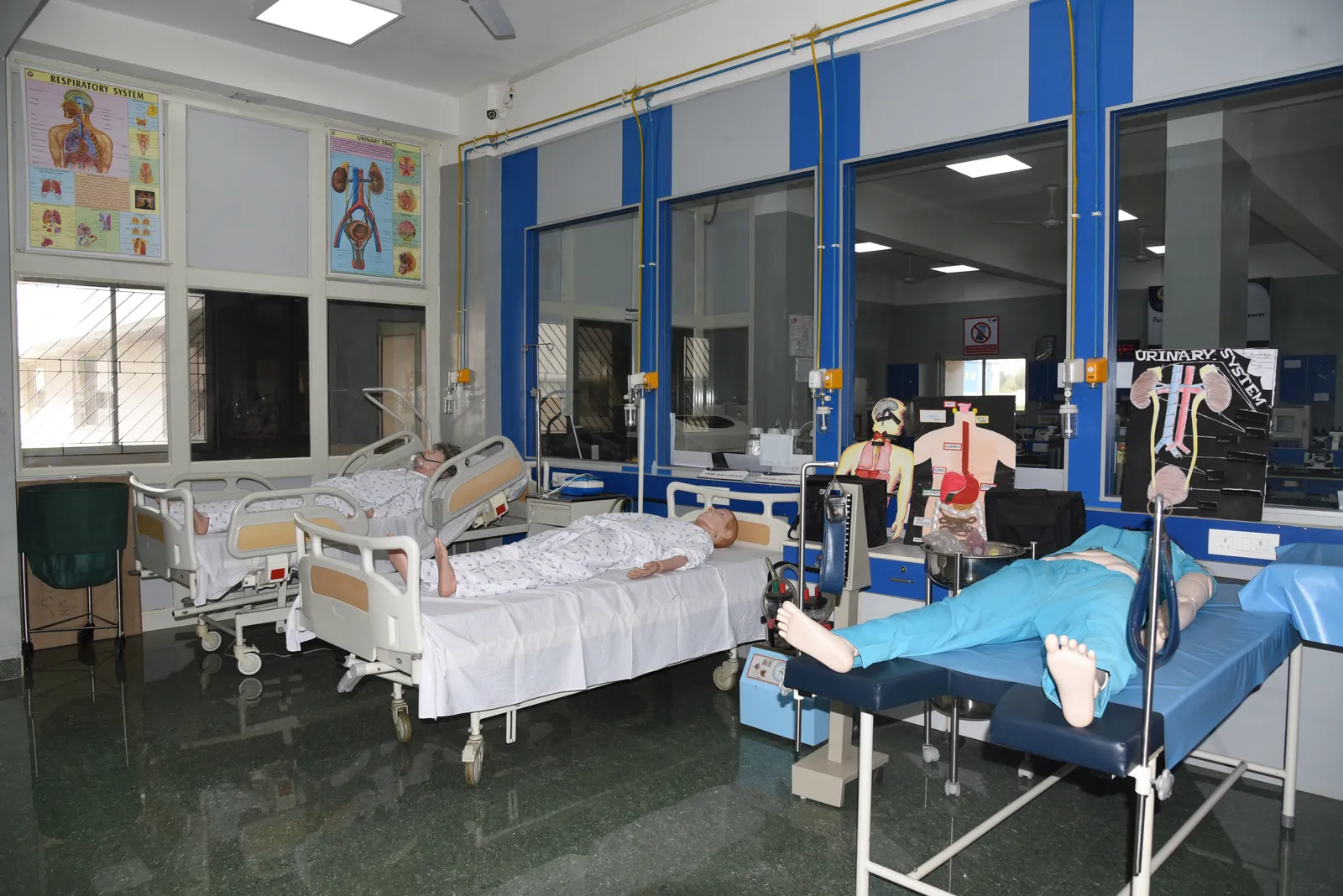
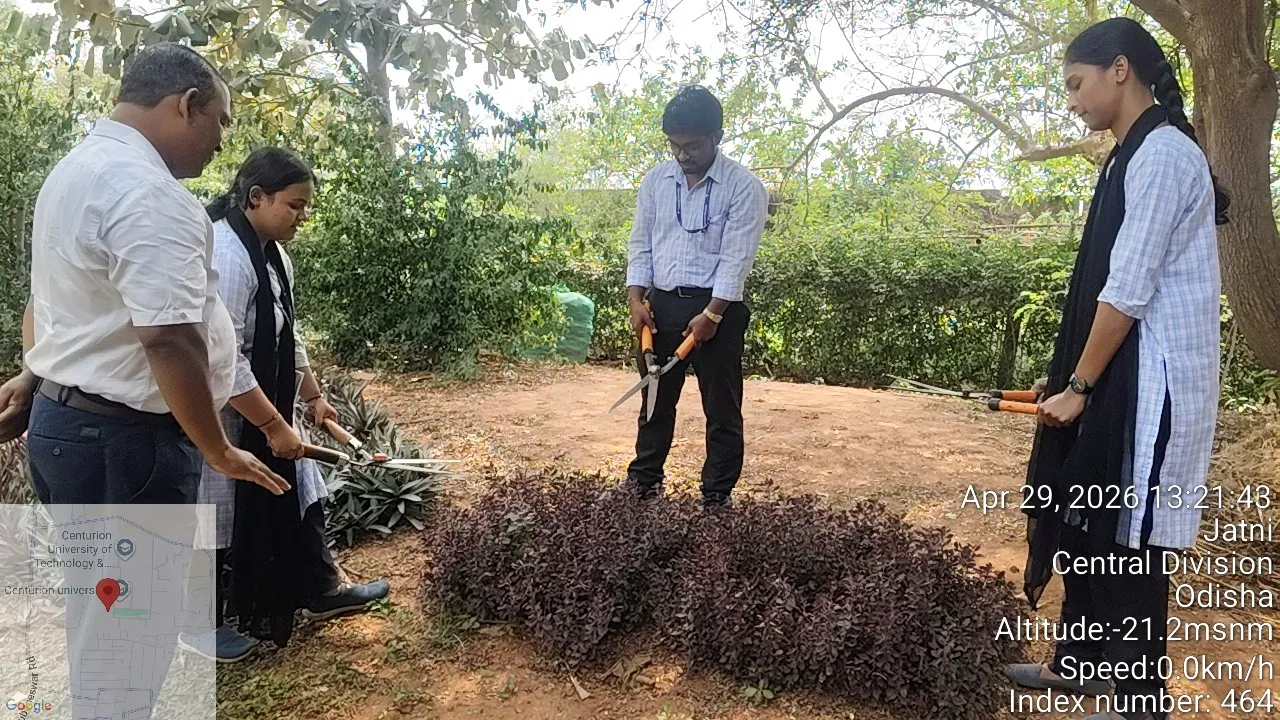
Practical demonstration in the workshop or work environment. Trainees observe tasks and procedures being completed, take notes, and learn the standard operating procedures.
- Step 01
- Phase II
Applied learning
- Step 03
Let me practise
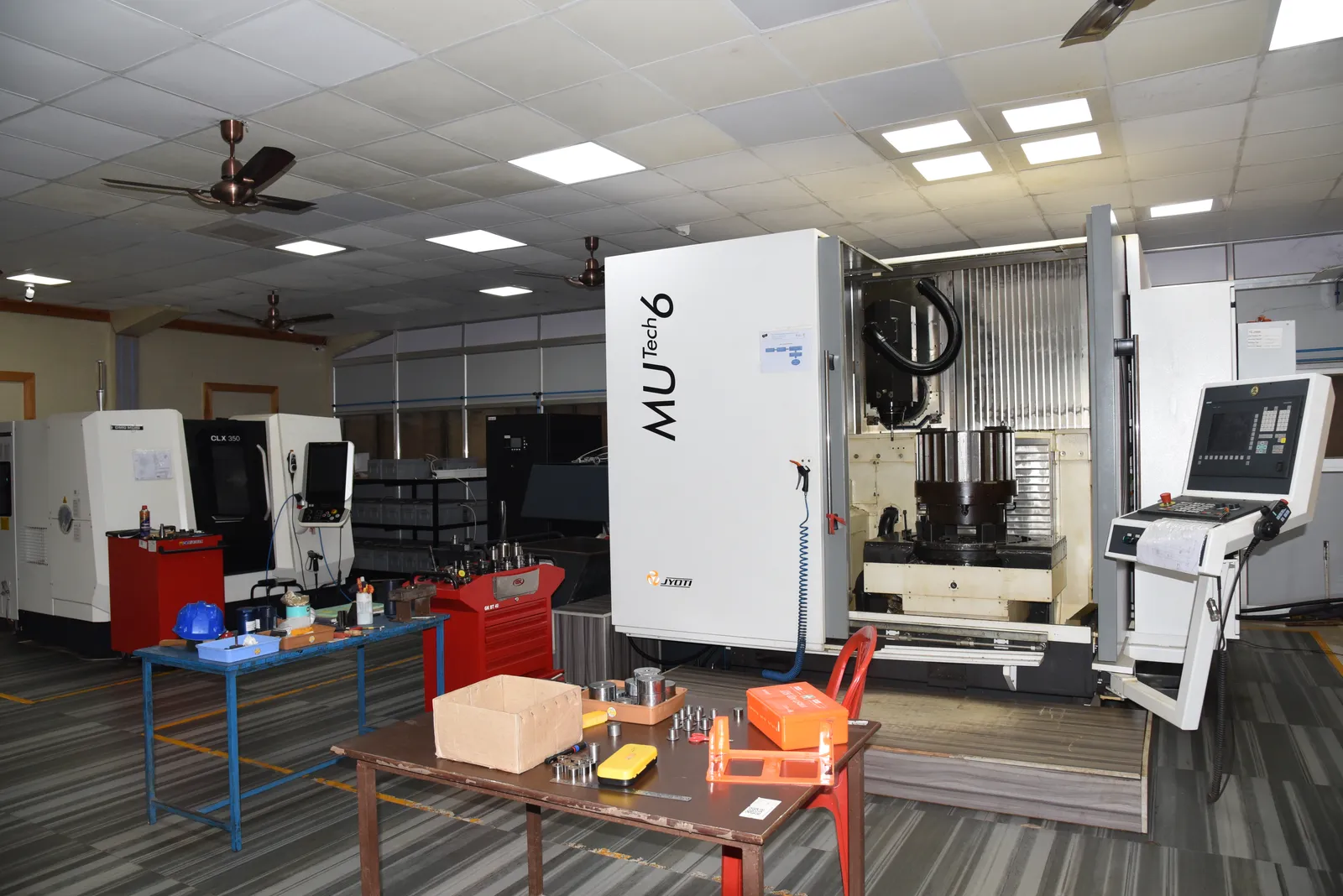
Industry-specification machines in a production environment, so hands-on practice happens on the equipment the job actually uses.
- Step 03
- Phase III
Action learning
- Step 04
Assess me
Assessment is continuous. Practical learning is measured daily on accuracy, process and time taken.
- Step 05
Let me show you
Trainees work independently in a live production environment, producing a good or service of real economic value.
- Step 06
Recognise me
A skill championship recognises the top performers of each batch. Final certification is by independent third-party assessment through sector skill councils or NCVT.
- Step 04
What gets assessed
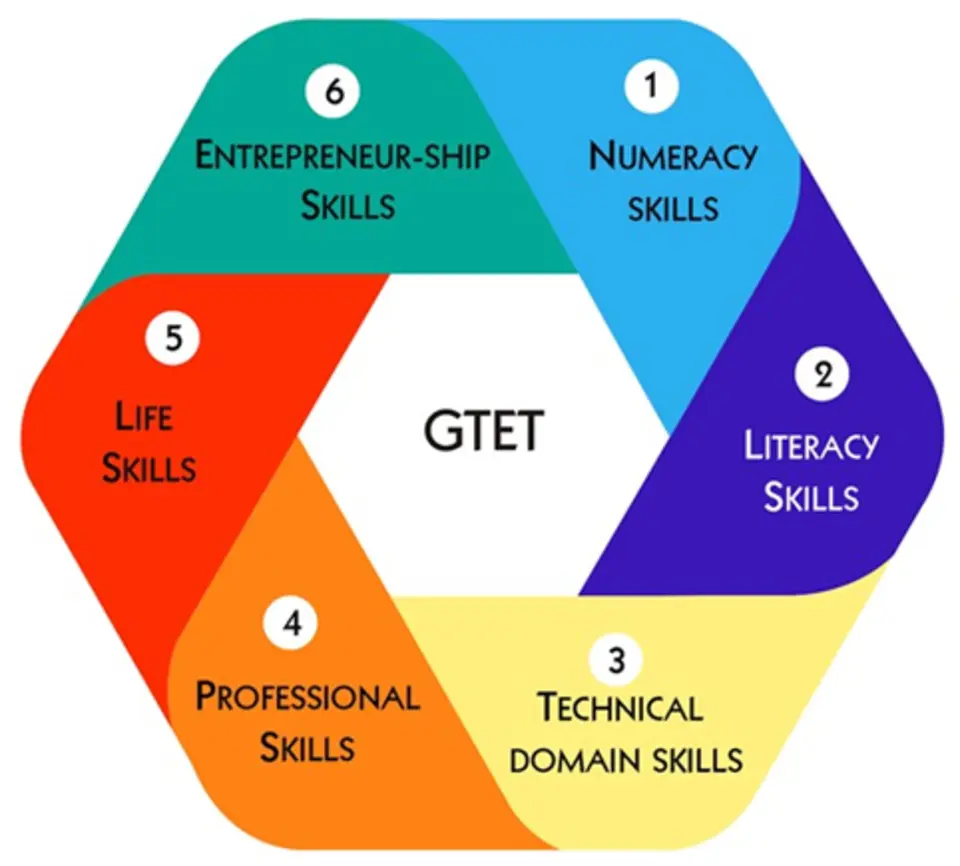
Six dimensions of skill.
Employers do not lose people because they cannot run the machine. They lose them because of everything else. So everything else is taught and measured too.
- 01
Numeracy
Using mathematical understanding to solve problems on the job — workshop measurement, calculation, basic arithmetic.
- 02
Literacy
Reading and understanding the forms of communication the trade requires: spoken language, printed text, digital media.
- 03
Technical domain
The trade-specific core knowledge and practical skill that constitutes expertise.
- 04
Professional
The behaviours that build a career: ethics, integrity, teamwork, communication, planning, time management, leadership.
- 05
Life skills
Adaptive behaviour for the demands of working life — IT literacy, financial planning, health, hygiene and sanitation.
- 06
Entrepreneurial
Live production experience and incubation support for those who want to become nano, mini or micro entrepreneurs.
Production
Every programme ends with something real.
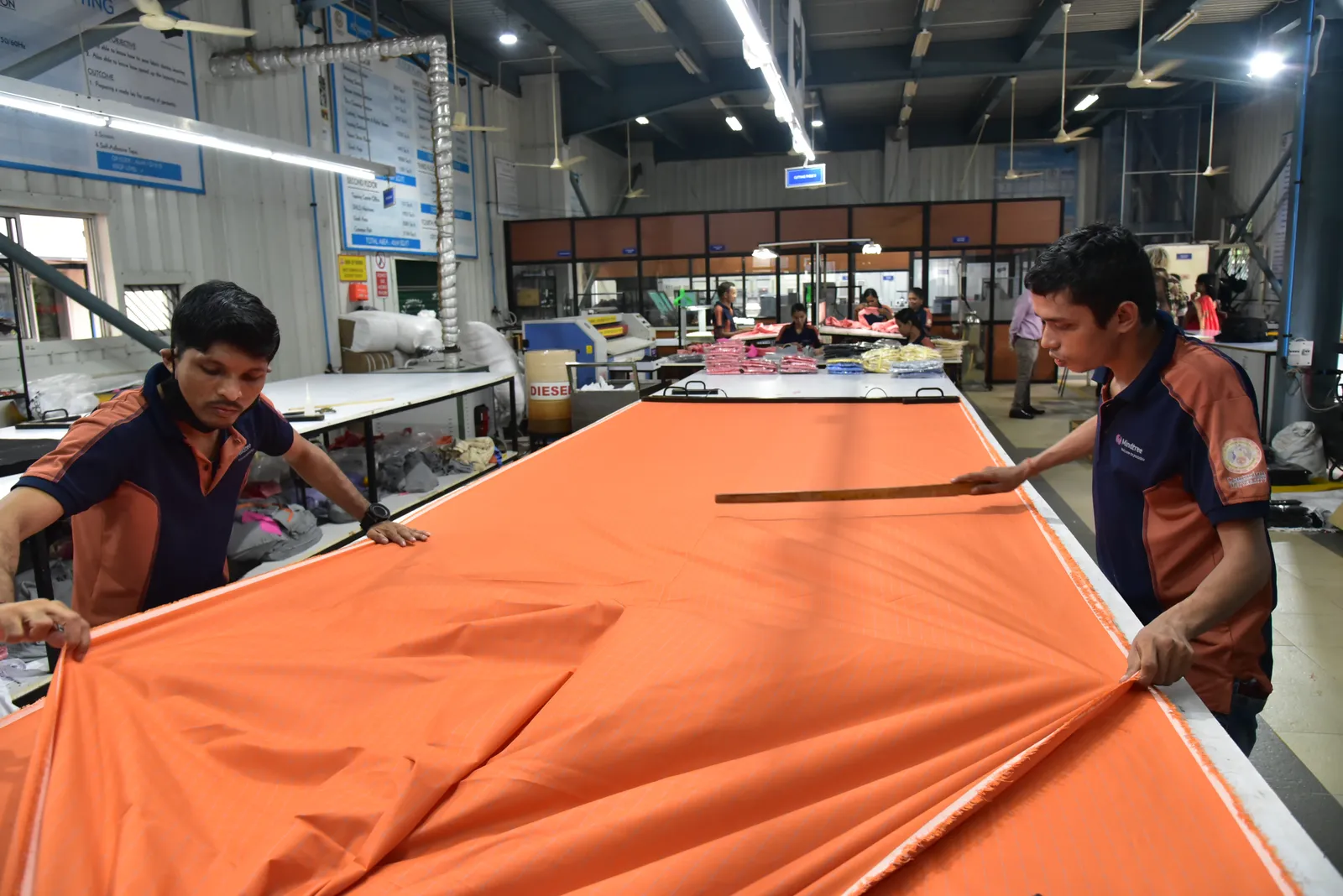
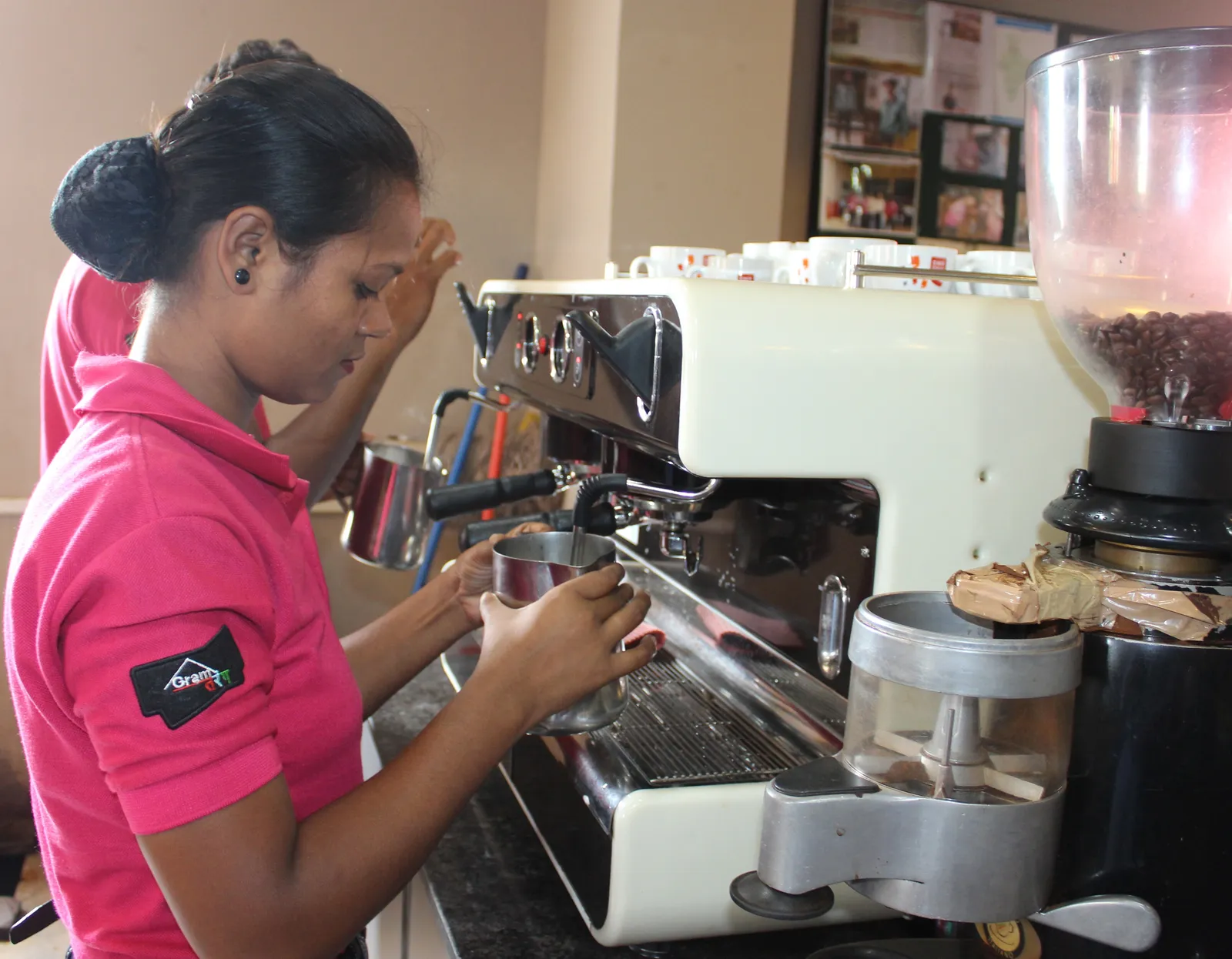
Welding, fabrication, machining, a garment, a cup of coffee. What trainees make has a buyer, a tolerance and a deadline.




Pathway
Career pathing through lifelong learning
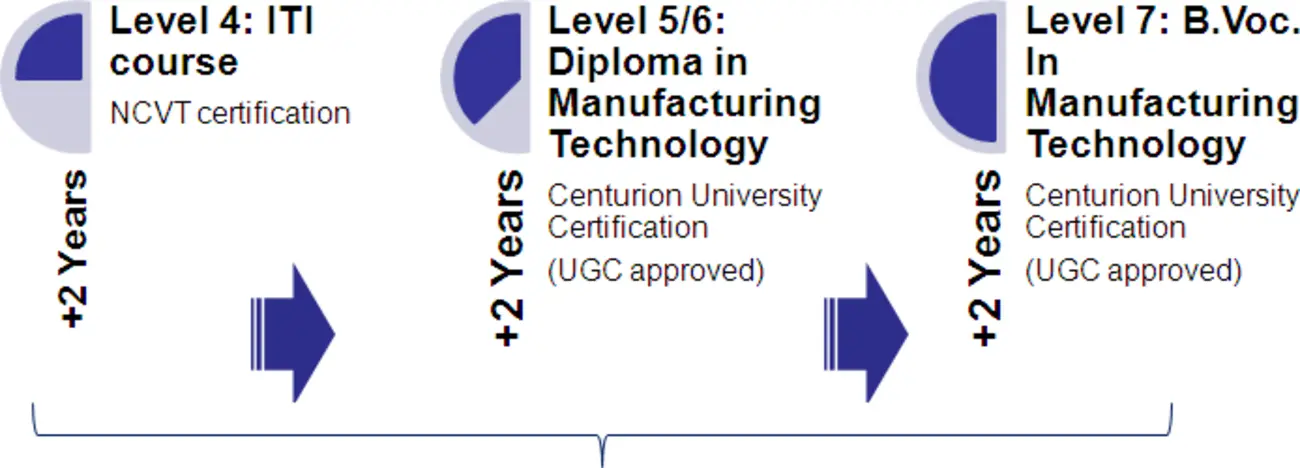
Tenth-pass youth mobilised from rural areas start on a foundation course, followed by an on-the-job training opportunity with an industry partner. For those who did not pass class ten, NIOS provides an alternate pathway.
Work-integrated learning combines
- Contact classes in a training room inside the factory or near the hostel
- E-learning and self-study through content developed by Gram Tarang Employability Training Services Pvt. Ltd.
- Practical job work in the workshop or a nearby ITI identified by Gram Tarang Employability Training Services Pvt. Ltd.
- Assignments and presentations
- On-the-job training and job appraisal
Assessment and certification conducted by
- DGT for ITI level (Level 3 and Level 4)
- Centurion University for Diploma, Advanced Diploma and B.Voc, under UGC guidelines through the DDU Kaushal Kendra scheme
Fees for many programmes are covered by government schemes such as PMKVY, DDU-GKY, Aajeevika, OSEMS and OSFDC. Ask us which one applies to you before you pay anything.
Choose a trade